

Advantages of industrial parts: Efficiency and reliability
Mst. Stefan PrimusMore than 60 percent of all malfunctions in industrial plants are due to the improper selection or use of industrial parts. The right components are the foundation for the performance, safety, and longevity of technical systems. Those who are aware of common mistakes and pay close attention to quality can minimize downtime and significantly increase efficiency. Our overview shows what really matters when it comes to industrial parts and how to avoid purchasing errors.
Table of contents
- Industrial parts defined and widespread misconceptions
- Overview of main types of industrial parts
- Key quality criteria and standards
- Typical industries and applications explained
- Economic advantages and potential savings
- Sources of error and risks when purchasing components
Key findings
| Point | Details |
|---|---|
| Interchangeability of industrial parts | Not all industrial parts are interchangeable; differences in quality and specifications influence the selection. |
| High quality determines performance | The selection of high-quality industrial parts is crucial for the efficiency and safety of technical systems. |
| Specialization is required | Modern industrial applications require specific, customized solutions, not just standard components. |
| Economic advantages through modules | Modular system solutions offer cost savings and efficiency in production and assembly. |
Industrial parts defined and widespread misconceptions
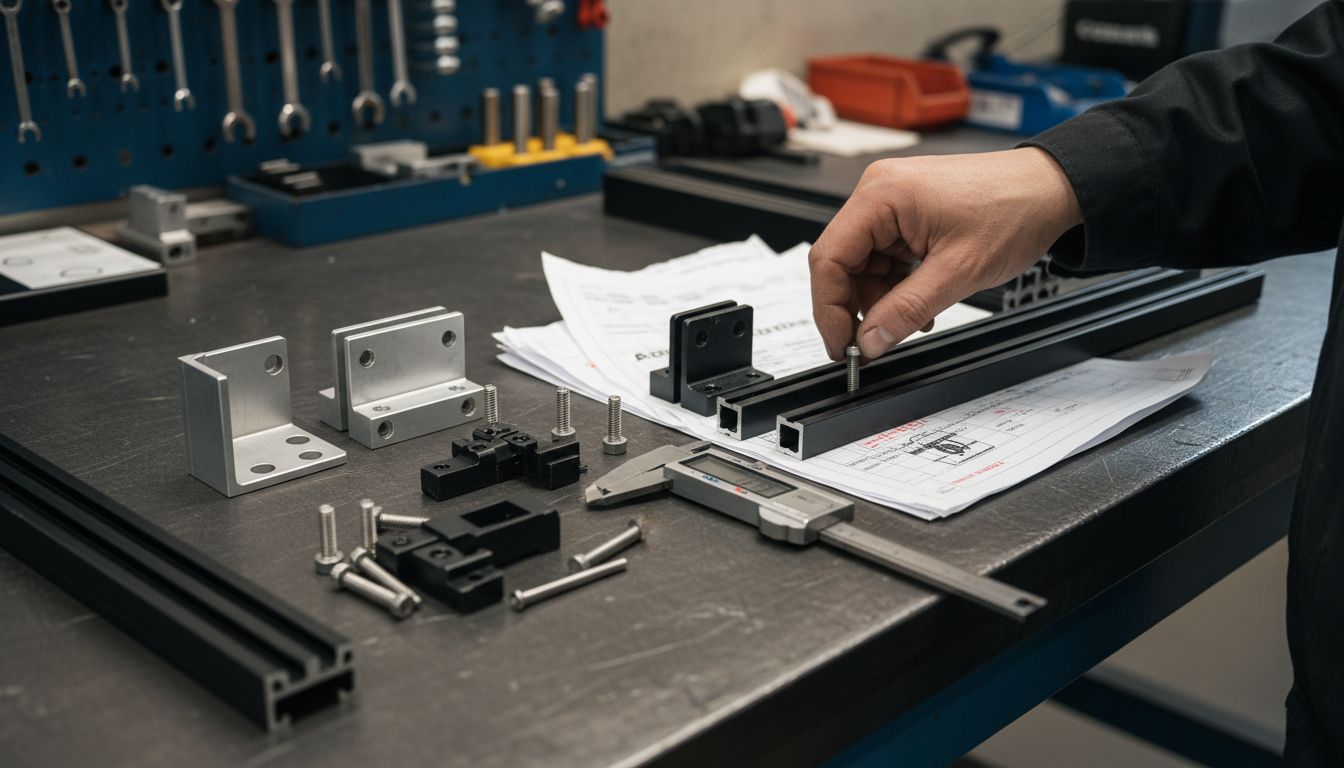
Industrial parts are specialized components that perform crucial functions in various technical and industrial applications. They include precisely manufactured elements such as connectors , profile systems , and brackets used in machines, plants, and structures.
A common misconception is that all industrial parts are interchangeable. In reality, these components differ significantly in quality, material, and technical specifications. Buying aluminum connectors – tips for private customers and businesses – illustrates the importance of carefully selecting the right industrial parts.
The main characteristics of high-quality industrial parts include:
- Precise manufacturing tolerances
- High material durability
- Optimized resilience
- Long-term operational reliability
Another common misconception is to view industrial parts as purely standard components. In reality, modern industrial applications require highly specialized solutions precisely tailored to specific requirements.Corner, T, and cross connectors made of aluminum illustrate the complexity and diversity of such industrial parts.
Professional engineers and technicians know that the quality of industrial components significantly determines the performance, safety, and reliability of technical systems. Thoughtful selection and integration of components is the key to success in demanding industrial environments.
Overview of main types of industrial parts
Industrial components can be divided into several main categories, each covering specific functions and application areas. The diversity of these parts enables highly flexible and efficient design in a wide variety of technical environments.
Connecting elements
The first important category consists of fasteners . These include screws, nuts, bolts, and clamps, which securely and precisely connect various components. Aluminum profiles: The different types and their applications in mechanical engineering illustrate the importance of such joining techniques in industrial constructions.
Profile systems
Profile systems represent another key category. These modular components, often made of aluminum, enable flexible designs in mechanical and plant engineering. Characteristic features include:
- High adaptability
- Lightweight
- Corrosion resistance
- Quick assembly
Fasteners
Fasteners such as brackets, consoles, and angles play a crucial role in stabilizing and aligning components. They ensure precise positioning and load distribution in complex mechanical systems.
Special industrial parts
In addition, there are highly specialized industrial parts for specific applications. These include guides, bearings, seals, and custom-made components. The accessories guide, "Which components should never be missing during PV installation?" , demonstrates how complex selecting the right components can be.
Choosing the right industrial parts requires sound technical understanding and precise knowledge of the respective application requirements.
Professional engineers and designers must carefully consider all aspects such as load-bearing capacity, material, tolerances, and environmental conditions.
Key quality criteria and standards
Ensuring quality and reliability is crucial in industrial component manufacturing. Quality standards define precise requirements that industrial parts must meet to guarantee the highest standards of performance and safety.
Key quality criteria include:
- Dimensional accuracy
- Material purity
- Mechanical load capacity
- Corrosion resistance
- Surface finish
Normative foundations
Technical standards form the foundation for industrial components. Terms and explanations related to aluminum profiles illustrate the complexity of the standardization landscape. International standards such as DIN, ISO, and EN define precise requirements for material properties, manufacturing tolerances, and testing procedures.
Testing procedures and certifications
Modern industrial parts undergo extensive quality controls. These include:
- Material analyses
- Stress tests
- Microscopic examinations
- Spectral analyses
Especially in safety-critical areas such as mechanical engineering or plant construction, stringent certification processes are essential. The accessories guide, "Which components should never be missing during PV installation?", underscores the importance of precise component selection.
For engineers and designers, this means that every industrial component must not only meet technical specifications but also fulfill the highest safety and performance standards. Compliance with these standards guarantees reliability, durability, and optimal performance in demanding industrial applications.
Typical industries and applications explained
Industrial components play a crucial role in a wide range of industries, enabling highly precise and efficient solutions to complex technical challenges. From machine construction to energy technology, these components find diverse applications.
Mechanical engineering and automation
In mechanical engineering, industrial components form the backbone of modern production systems. Precise fasteners, modular profile systems, and specialized fastening solutions enable flexible and high-performance constructions. The article "10 Tips for Faster and More Efficient Photovoltaic System Assembly" illustrates just how crucial suitable industrial components are for efficient assembly processes.
Energy technology
Industrial components play a key role in photovoltaics and renewable energies. The requirements are extreme: components must guarantee the highest precision, corrosion resistance, and durability. The importance of high-quality industrial components is underscored by the fact that reliable suppliers are invaluable in the PV industry .
Other important areas of application include:
- Robotics
- aviation industry
- Medical technology
- Automotive
- Plant construction
Special industrial sectors
Workplace systems require highly flexible and ergonomic solutions. Modular industrial components enable precisely configurable work environments. The complexity of such systems is evident in workplace components for lean and assembly systems .
Every industry places unique demands on industrial parts. Adaptability, precision, and reliability are crucial. Modern engineers and designers must understand these parts not only as technical components, but also as strategic building blocks for solutions that enable efficiency and innovation.
Economic advantages and potential savings
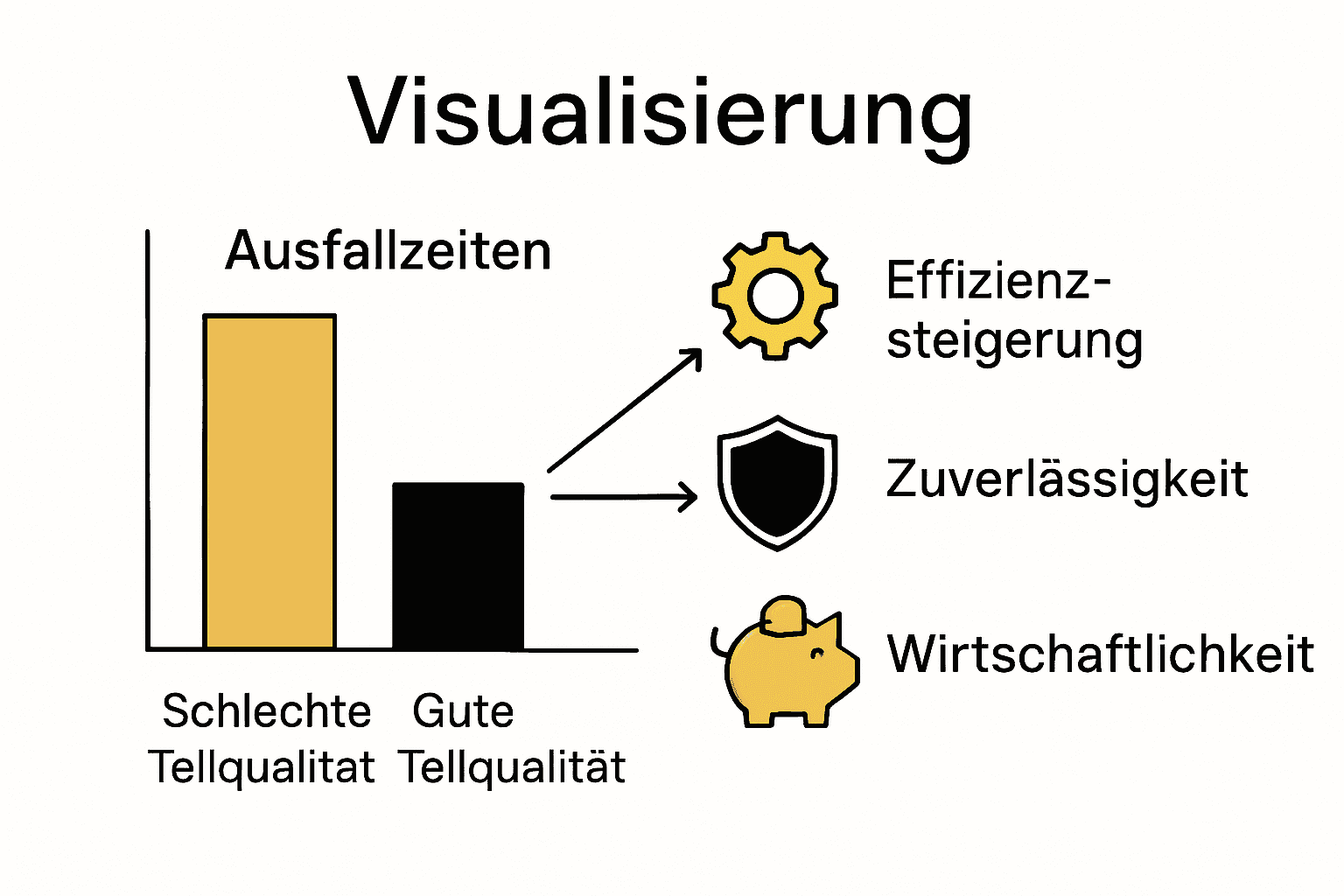
Industrial parts are more than just technical components. They are strategic investments that can generate significant economic benefits for companies. Through intelligent selection and deployment, organizations can achieve substantial cost savings while simultaneously increasing their productivity.
Cost efficiency through modularity
Modular system solutions enable flexible and cost-effective configurations. Aluminum profiles: Sustainable installation of photovoltaic systems made easy shows how reusable components can generate long-term savings.
Key potential savings include:
- Reduced material costs
- Minimized replacement frequency
- Lower maintenance costs
- Faster assembly and installation
- Optimized resource utilization
Investment calculation
The acquisition of high-quality industrial components follows a strategic investment logic. Higher initial costs are offset by long-term benefits:
- Longer lifespan
- Lower probability of failure
- Reduced repair costs
- Higher system efficiency
Sustainability aspects
Economic advantages go hand in hand with sustainability aspects. Effective potential equalization – safety solutions illustrate how industrial components offer not only economic but also safety-related added value.
For modern companies, this means that industrial parts are not cost factors, but investments in efficiency, reliability, and long-term business success. The strategic selection of high-quality components becomes a competitive advantage.
Sources of error and risks when purchasing components
Purchasing industrial parts is a complex task that can have far-reaching consequences for business processes. Inappropriate decisions can lead to significant technical and financial risks that often only become apparent later.
Typical sources of error
The most common risks when buying components include:
- Misjudgment of material quality
- Insufficient compatibility testing
- Neglecting specific operational requirements
- Focus solely on acquisition costs
- Ignoring manufacturer certifications
Assembly risks
Installation errors can severely impair the overall performance of a system. The 5 biggest mistakes in the installation of photovoltaic systems – and how to avoid them – illustrate the importance of precise installation processes.
Strategies for minimizing risk
To reduce potential sources of error, experts recommend the following approach:
- Comprehensive technical specification analysis
- Detailed compatibility tests
- Referencing manufacturer certificates
- Simulation of load scenarios
Long-term view
How safe installation extends the lifespan of PV systems shows that careful component selection not only minimizes risks, but also increases system lifespan and profitability.
For engineers and purchasing managers, this means that industrial parts are not standard commodities, but strategic investments that require careful analysis, selection and implementation.
Ensure efficiency and reliability through high-quality industrial components
The advantages of industrial components lie clearly in their ability to make processes more efficient and reliable. The topic described in your article clearly illustrates the challenge of selecting precise fasteners and modular profile systems that not only meet technical requirements but also support the long-term lifespan and safety of your equipment. In particular, terms like precision , material durability , and optimized load-bearing capacity are crucial for your success.
At spannwerk.at, we offer precisely these components with proven quality and versatile applications. Aluminum profiles and connectors enable you to implement your projects flexibly, robustly, and cost-effectively. Our industrial solutions support you in achieving your goals and avoiding typical pitfalls when purchasing components.
Set the course now for your successful project implementation and benefit from high-quality industrial parts.
Discover our extensive product range at spannwerk.at and secure quality you can rely on. Get started today with the right materials for efficient and dependable production.
Frequently Asked Questions
What are the main advantages of industrial parts?
Industrial components offer numerous advantages, including high efficiency, reliable performance, precise manufacturing, and adaptability to specific applications. They contribute to the optimization of machines and systems.
How do high-quality industrial parts affect productivity?
High-quality industrial parts can significantly increase productivity by improving operational reliability, reducing downtime, and enabling faster assembly. This leads to a smoother production process.
Why is the quality of industrial parts important?
The quality of industrial parts is crucial, as it directly affects the performance, safety, and lifespan of machinery and equipment. Low-quality parts can lead to failures and increased costs.
What factors should I consider when selecting industrial parts?
When selecting industrial parts, you should consider aspects such as material quality, manufacturing tolerances, specific application requirements and certifications to ensure optimal performance and reliability.
Recommendation
- Automatic connectors for optimal connection technology – SPANNWERK.at
- Workplace components for lean and assembly systems – SPANNWERK.at
- 10 tips to make photovoltaic systems faster and more efficient – SPANNWERK.at
- How safe installation extends the lifespan of PV systems - – SPANNWERK.at
- 7 advantages of rechargeable batteries - accu.blog