

The Role of Industrial Hardware: Comprehensive Guide 2024
Mst. Stefan PrimusOver 80 percent of all industrial failures can be traced back to faulty hardware. Anyone working in production knows: reliable industrial hardware determines the success or failure of entire manufacturing processes. From precisely manufactured fasteners to complex system solutions – the right choice and quality of hardware ensure stability, efficiency, and future viability. Here you will learn how industrial hardware, as the foundation of modern technology, is so compelling and what really matters when using it.
Table of contents
- Definition and basic importance of industrial hardware
- Comparison of different types and system solutions
- Key features and technical standards
- Key areas of application in industry and mechanical engineering
- Requirements, obligations and legal provisions
- Risks, costs and sources of error in use
Key findings
| Point | Details |
|---|---|
| Structural integrity | Industrial hardware ensures the mechanical stability and precision of production facilities. |
| Modularity and adaptability | Flexible and modular system solutions allow adaptation to various technical requirements. |
| Technical standards | Compliance with technical standards is crucial for the interoperability and efficiency of industrial systems. |
| Risk management | Proactive risk assessments and strategic maintenance approaches are necessary to minimize technical errors and economic inefficiencies. |
Definition and basic importance of industrial hardware
Industrial hardware forms the physical backbone of technical systems and production processes. It encompasses all material components used in industrial manufacturing, automation, and machine construction. Industrial hardware is more than just a simple component – it represents the structural and functional foundation of technical infrastructures.
According to IBM 's definition, hardware components are the physical elements that interact directly with mechanical, electrical, or electronic systems. In an industrial context, this means components such as metal profiles, fasteners, hinges, slotted nuts, and other precision-manufactured connection elements. These components not only enable the construction of complex machines but also ensure their stability, precision, and functionality.
The importance of industrial hardware can be summarized in several key aspects:
- Structural integrity : Ensuring the mechanical stability of industrial plants
- Precision connections : Enabling precise connections between different components
- Modularity : Flexible adaptability to different technical requirements
- Durability : Resistance to extreme stresses and environmental conditions
As Delst emphasizes, hardware components are more than passive parts – they are active carriers of technological functionality. In modern industrial systems, hardware components must not only be mechanically robust, but also intelligent and adaptable. They form the physical basis for innovations in fields such as mechanical engineering, automation, and industrial design.
The quality and precision of industrial hardware ultimately determines the performance and reliability of technical systems.
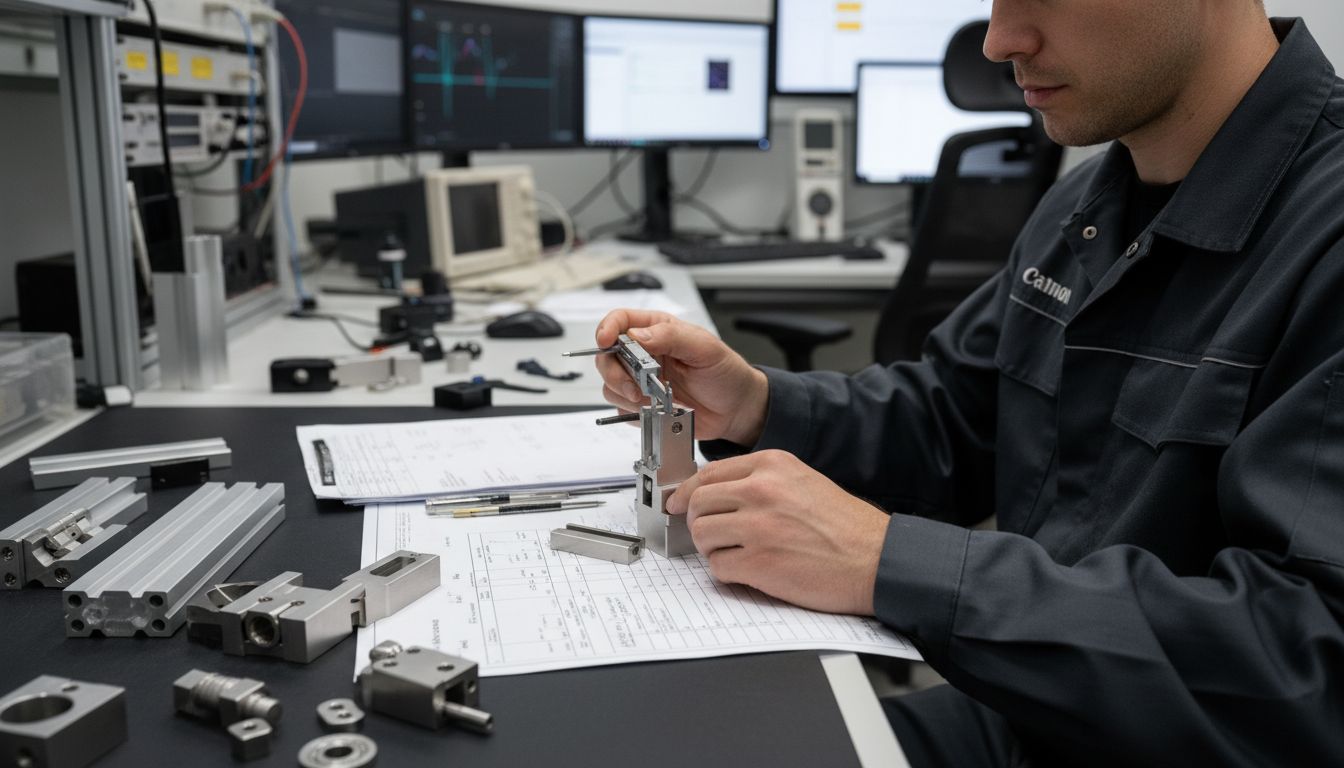 Professional companies therefore invest specifically in high-quality hardware components that meet the highest technical standards.
Comparison of different types and system solutions
Industrial hardware encompasses a wide range of system solutions, distinguished by their specific characteristics and applications. These system solutions are classified according to their functionality, complexity, and application domain. According to Keding Direct, hardware solutions vary considerably depending on the technological context and industry requirements.
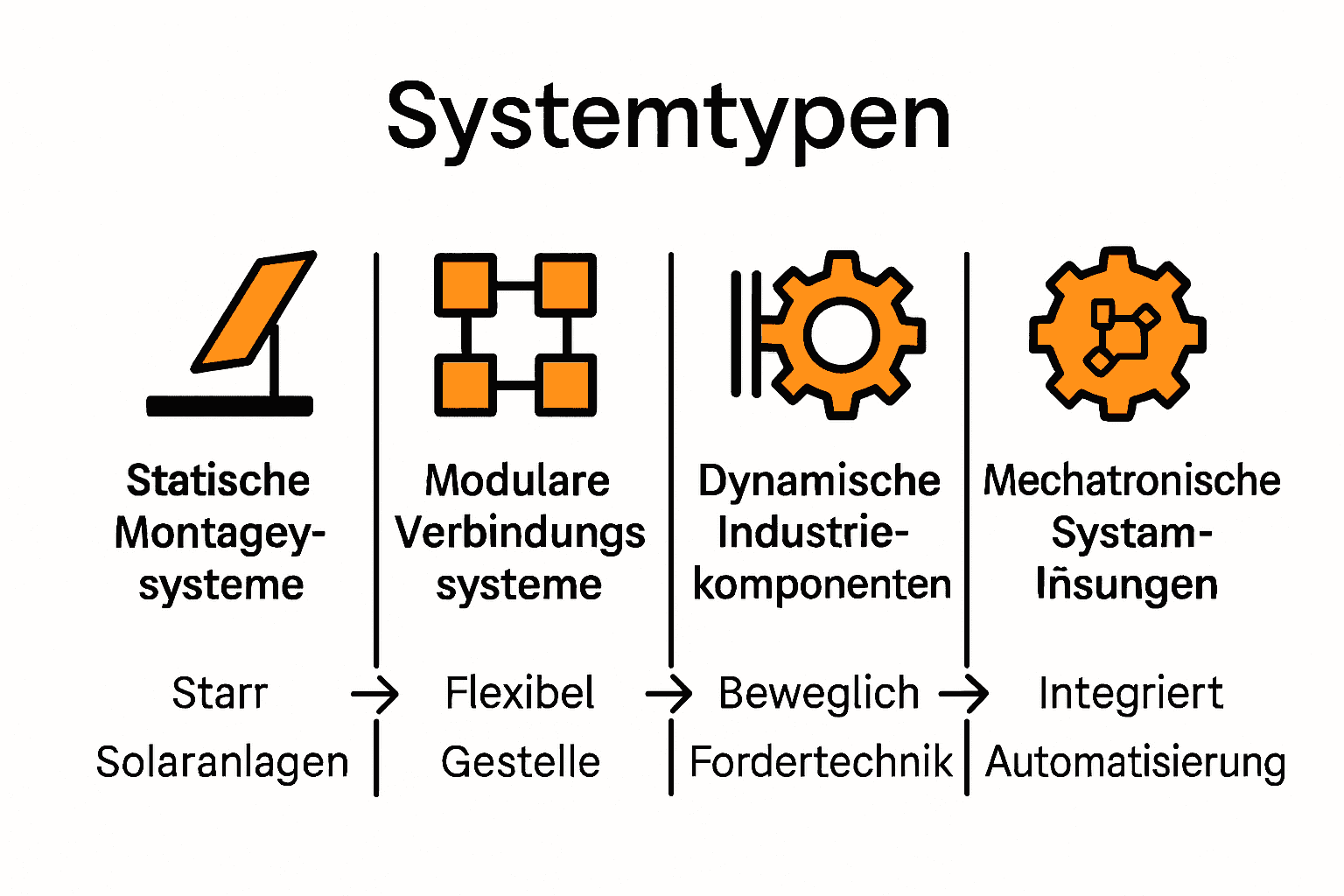
According to Novotec, industrial hardware solutions can be divided into the following main categories:
- Static mounting systems : Rigid structures for static applications
- Modular connection systems : Flexible components with high adaptability
- Dynamic industrial components : Moving elements for complex machine architectures
- Mechatronic system solutions : Intelligent hardware with integrated control technology
Several criteria play a crucial role in selecting the right system solution. In addition to basic technical functionality, companies must also consider aspects such as scalability, compatibility, and long-term performance. A comparison of mounting systems – roof, facade, and ground-mounted installations – illustrates just how complex the selection of suitable hardware solutions can be.
The complexity of modern system solutions demands a holistic approach. Engineers and technical decision-makers must understand not only the individual hardware components but also their interaction within the overall system. Criteria such as precision, robustness, adaptability, and cost-effectiveness are crucial. Only through systematic analysis can companies identify the optimal hardware solution for their specific requirements.
Here is an overview of the most important types of industrial hardware systems in comparison:
| System type | Characteristics | Typical applications |
|---|---|---|
| Static mounting systems | Rigid High stability |
construction Permanent installations |
| Modular connection systems | Flexible Easily expandable |
Plant construction Individual adjustments |
| Dynamic industrial components | Movable Suitable for rotation |
Machines with moving parts |
| Mechatronic system solutions | Intelligent control Automated |
robotics Flexible production lines |
Key features and technical standards
Industrial hardware is defined by a set of critical characteristics and technical standards that determine its performance and reliability. These technical standards form the foundation for compatibility, safety, and efficiency in complex industrial systems. Exor International emphasizes the crucial role of standardized hardware solutions for modern industrial applications.
According to Digi International, the most important characteristics of industrial hardware can be divided into the following core areas:
- Robustness : Resistance to extreme environmental conditions
- Scalability : Flexible adaptability to different system requirements
- Real-time capability : Precise and delay-free data processing
- Energy efficiency : Optimized power consumption and resource utilization
When selecting industrial hardware components, technical standards such as IP protection classes, temperature tolerance, and communication protocols play a crucial role. Aluminum profiles: Different types and their applications in mechanical engineering exemplify how specific material properties and design standards influence the performance of hardware components.
The complexity of modern industrial systems necessitates a holistic approach to technical standards. Companies must evaluate not only individual hardware components, but also their interaction and interoperability. Criteria such as compliance with standards, future-proofing, and compatibility with existing system architectures are crucial. Only through systematic analysis can companies implement hardware solutions that meet the highest technical and economic requirements.
Key areas of application in industry and mechanical engineering
Industrial hardware now permeates virtually all areas of modern mechanical engineering and industrial production. Applications range from highly automated production lines to complex control systems in a wide variety of industries. Exor International underscores the increasing importance of edge computing hardware for innovative industrial solutions.
According to Digi International, key application areas of industrial hardware can be classified into the following core areas:
- Production automation : Control and optimization of manufacturing processes
- Machine monitoring systems : Real-time analysis and condition monitoring
- Robotics and Automation : Precise Control of Industrial Robots
- Energy management : Efficient resource use and consumption control
Corner, T and cross connectors made of aluminum exemplify how specific hardware components can significantly improve the flexibility and performance of industrial systems.
The complexity of modern industrial applications demands highly flexible and intelligently networked hardware solutions. Companies must no longer view hardware components in isolation, but rather as part of a holistic, dynamic production system. Crucial criteria include interoperability, scalability, and adaptability to constantly changing technological requirements.
Requirements, obligations and legal provisions
The use of industrial hardware is subject to complex legal frameworks and specific requirements that companies must strictly adhere to. Legal regulations vary depending on the industry and application area, defining clear compliance standards for hardware systems. BBZ EDV emphasizes the necessity of comprehensive legal knowledge when implementing technical systems.
According to Keding Direct, companies must consider the following key requirement areas:
- Technical safety standards : Compliance with standardized safety guidelines
- Data protection compliance : Protection of sensitive company data
- Environmental compliance : Adherence to recycling and disposal regulations
- Occupational health and safety regulations : Ensuring safe working environments
Automatic connectors for optimal connection technology illustrate how specific hardware components can specifically meet legal requirements.
The complexity of legal requirements necessitates a proactive and holistic approach. Companies must assess not only individual hardware components but their entire lifecycle from a legal perspective. Transparent documentation processes, regular compliance audits, and the implementation of systematic risk management strategies are crucial.
Risks, costs and sources of error in use
The use of industrial hardware presents complex challenges that require careful analysis and proactive risk management. Technical risks arise not only from the hardware components themselves, but also from their interaction and implementation. Exor International emphasizes the importance of a holistic risk approach for industrial hardware solutions.
According to Novotec, key sources of error can be divided into the following categories:
- Technical compatibility problems : Interface conflicts and integration difficulties
- Wear risks : Premature material fatigue and performance degradation
- Security vulnerabilities : Potential weaknesses in hardware systems
- Economic inefficiencies : Hidden follow-up costs due to suboptimal hardware selection
The 5 biggest mistakes in the installation of photovoltaic systems illustrate how systematic error analysis can minimize risks.
The complexity of industrial hardware systems necessitates continuous monitoring and preventive maintenance strategies. Companies must consider not only individual components but the entire technical ecosystem. Transparent risk assessments, regular performance analyses, and flexible adaptation strategies are crucial for identifying and minimizing potential sources of failure early on.
Find high-quality industrial hardware and successfully implement your projects
The complex demands of industrial hardware require precise, robust, and reliable components that guarantee long-term stability and functionality. If you are looking for industrial aluminum profiles , joining technologies , or specialized hinges that are precisely tailored to your manufacturing and assembly processes, Spannwerk will support you in mastering your technical challenges efficiently and sustainably.

Take advantage of this opportunity and benefit from high-quality products that meet the highest technical standards. Discover a comprehensive range of industrial hardware with detailed product information and attractive offers at https://spannwerk.at . Enter a world of precision and quality and take your industrial production to the next level.
Frequently Asked Questions
What is industrial hardware and what role does it play?
Industrial hardware encompasses all physical components used in industrial manufacturing and automation. It forms the physical backbone of technical systems and ensures the stability, precision, and functionality of machines.
What types of industrial hardware are there?
There are various types of industrial hardware, including static assembly systems, modular connection systems, dynamic industrial components, and mechatronic system solutions. Each type has specific characteristics and areas of application.
What important characteristics should industrial hardware possess?
The most important characteristics of industrial hardware are robustness, scalability, real-time capability, and energy efficiency. These criteria are crucial for performance and reliability in industrial applications.
What are the main areas of application for industrial hardware?
Industrial hardware is used in various fields, including production automation, machine monitoring systems, robotics, and energy management. It improves the efficiency and flexibility of industrial processes.
Recommendation
- Accessories Guide: Which components should never be used during PV installation – SPANNWERK.at
- Roller Ø39 mm – compatible with ASPI & suitable for ASPB systems – SPANNWERK.at
- Buy glides and rollers for aluminum profiles – SPANNWERK.at
- Terms and explanations related to aluminum profiles – SPANNWERK.at
- Lasers in series production: Complete guide 2024 – Laser services
- Lasers in mechanical engineering: Everything you need to know explained – Laser services