

Aluminum Profile Price Per Kg Guide: Current Information 2025
SPANNWERK.atThe price per kg of aluminium profiles will be a crucial cost factor for buyers, builders, and engineers in 2025. Anyone who wants to implement projects efficiently and economically must keep a close eye on current price trends.
Rising commodity prices and global uncertainties significantly impact cost calculations. Only with up-to-date information can risks be minimized and potential savings be effectively utilized.
This guide explains the factors that determine the market, how prices develop, and offers tips for optimizing your procurement. Expert assessments and practical examples will help you make informed decisions.
Key factors influencing the price of aluminium profiles per kg
The pricing of aluminum profiles is complex and depends on many factors. To understand the price per kilogram of aluminum profiles, one must know the most important influencing factors. In the following sections, we will examine the crucial parameters that determine the price.
Commodity prices and market fluctuations
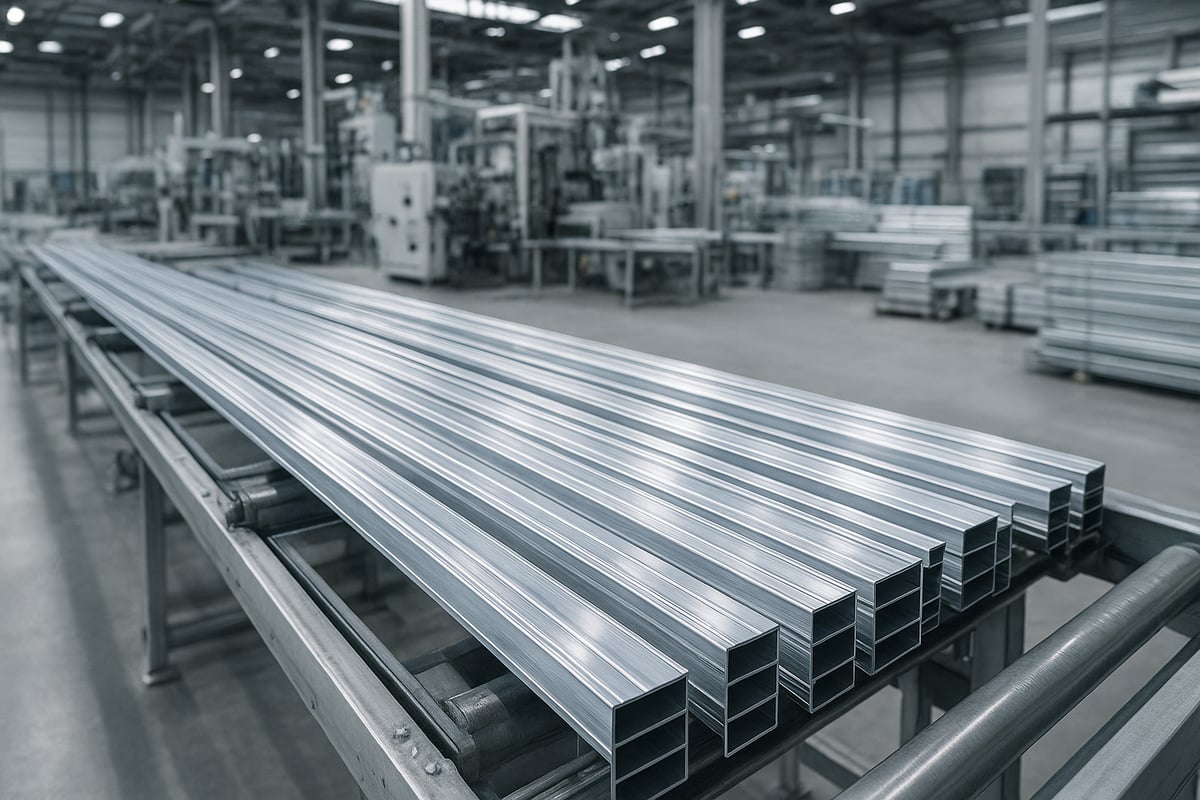
The price of aluminium profiles per kg is significantly influenced by the current aluminium exchange price, for example on the London Metal Exchange (LME). Fluctuations arise from changes in supply and demand, such as when global production capacities increase or inventories decrease.
A look at the years 2023 to 2025 reveals significant price jumps: While prices were still below USD 2,200/ton in 2023, they temporarily rose above USD 2,500/ton in 2024. According to industry portals, the price of aluminum profiles per kg can therefore be subject to strong fluctuations, which makes calculations more difficult for buyers.
Alloy, grade and profile type
Not every alloy has the same price. Common types like 6060 or 6063 are cheaper than high-strength special alloys. The grade, such as EN AW quality, also significantly influences the price per kg of aluminum profiles.
Standard profiles are less expensive than complex custom profiles. Different profile types and their applications can be found in the article "Aluminum Profiles – Types and Applications" . Simple shapes often cost 15–20 percent less than complex custom designs.
Production and processing costs
Manufacturing costs comprise energy, personnel, and the technologies used. Particularly energy-intensive processes such as melting or extrusion directly influence the price per kilogram of aluminum profiles. Rising electricity prices or higher labor costs noticeably affect the final price.
Further processing, such as anodizing or powder coating, increases the price even more. While modern manufacturing technologies can increase efficiency, they also lead to investments that affect the price.
Transport, logistics and packaging
Logistics costs also significantly impact the price per kilogram of aluminium profiles. Shipping, storage, and specialized handling are expensive, especially for long or fragile profiles. Regional differences, such as higher delivery costs to remote areas, can considerably increase the price.
Global supply chain problems, such as bottlenecks or delays, often lead to short-term price adjustments. Efficient packaging not only protects the material but also influences the cost structure.
Order quantity and individual requirements
The quantity ordered has a significant impact on the price per kilogram of aluminum profiles. Larger quantities often allow for attractive tiered pricing and volume discounts. However, individual requirements such as custom sizes, special cuts, or surface finishes will incur additional charges.
Experience shows that a large order of standard profiles can be up to 25 percent cheaper than a single order with custom-made parts. Those who plan flexibly and combine quantities can save considerably.
Current price trends and forecasts for 2025
The market environment for the price of aluminum profiles per kg is changing. Many factors influence pricing, from raw material costs to geopolitical developments. Those who maintain an overview can make informed decisions and optimize costs.
Looking back: Price trends of recent years
Between 2020 and 2024, the market for aluminium profiles (price per kg) exhibited high volatility. The COVID-19 pandemic caused production shutdowns and supply bottlenecks, leading to price increases. The 2022 energy crisis further increased manufacturing costs, and inflation exacerbated this trend.
According to industry reports, the average aluminum price in 2020 was around USD 1,700/ton, climbed to over USD 3,000/ton in 2022, and settled at around USD 2,200 to 2,500/ton in 2023/2024. These fluctuations are directly reflected in the aluminum profile price per kg.
Current price range 2025
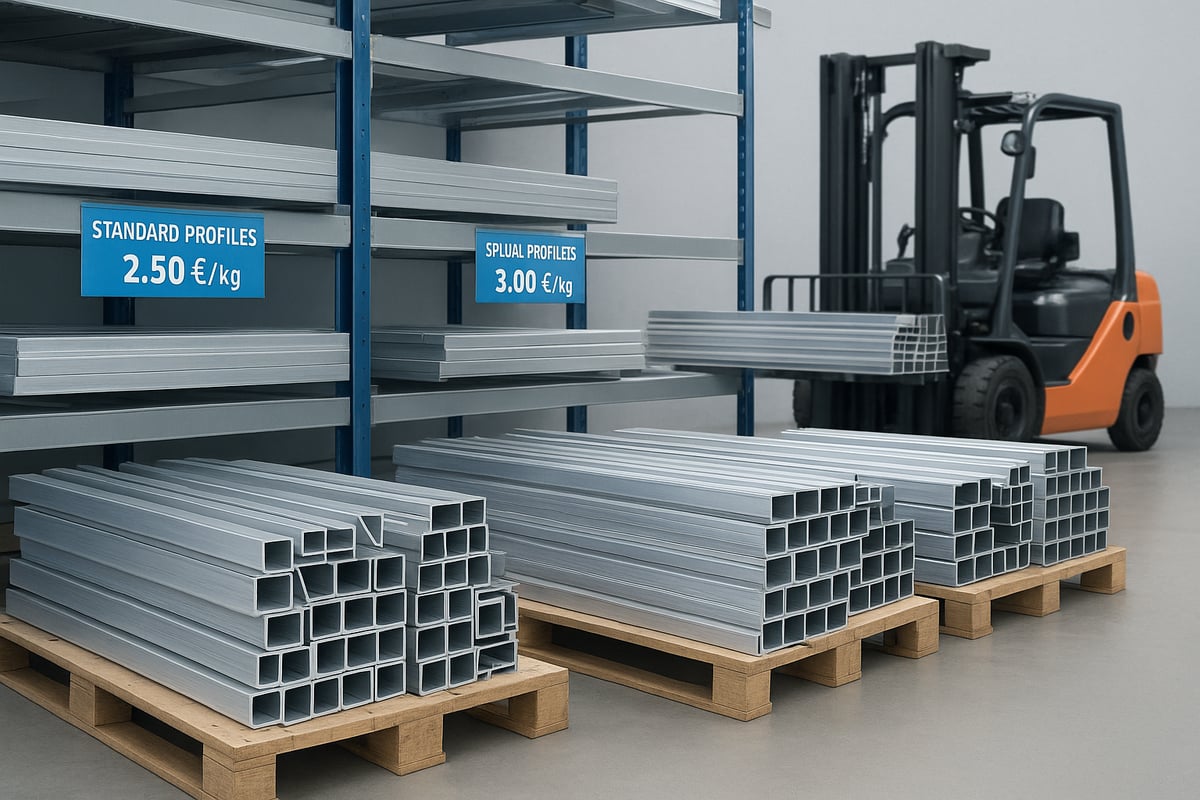
In 2025, the price per kilogram of aluminum profiles for standard profiles will typically range between €4.00 and €5.20. Special profiles or profiles with special surface treatments often cost between €5.50 and €7.50 per kilogram. The price range varies depending on the supplier, order quantity, and profile type.
Wholesalers offer attractive tiered pricing for larger order quantities, while online shops impress with transparent pricing. Those seeking an up-to-date market overview will find detailed price lists and comparative data in the Aluminium Profile Price List 2025. Choosing the right partner can therefore significantly influence the price per kilogram of aluminium profiles.
Forecasts and expert opinions for 2025
Experts anticipate moderate price development for aluminium profiles per kg in 2025. IKB and LBBW expect prices between USD 2,200 and USD 2,600 per ton for raw aluminium. Reasons for this include fluctuating energy costs, a recovery in industrial demand, and geopolitical uncertainties.
According to current market analyses, profile prices could stabilize, provided there are no major disruptions in the supply chains. However, short-term fluctuations remain possible. For reliable calculations, it is recommended to continuously monitor market forecasts.
Impact of sustainability and recycling
Sustainability is becoming increasingly important in the context of aluminium profile price per kg. Manufacturers are increasingly relying on recycled aluminium, which not only protects the environment but can also offer price advantages. The use of recycled material reduces energy consumption and thus production costs.
Environmental regulations and certifications also influence pricing. Some suppliers transparently disclose the proportion of recycled material used, thus positioning themselves as sustainable partners. For many projects, the ecological footprint is becoming the decisive criterion.
Regional differences and international comparisons
There are significant price differences per kg for aluminium profiles between Germany, Austria, Switzerland, and international markets. Prices in Germany and Austria are generally similar, while import duties and taxes in Switzerland can lead to higher costs.
International comparisons show that Asian markets often offer lower prices, but at the expense of delivery times and service quality. Those who shop globally should consider transport costs and exchange rates in addition to price.
Typical price examples from practice
For a mechanical engineering project using 500 kg of standard aluminum profiles, the price per kg can be around €4.30. Smaller orders, for example 50 kg, usually cost €5.50 per kilogram or more. Custom profiles with individual cuts quickly reach prices exceeding €7 per kilogram.
A practical example: In the construction industry, total costs of approximately €5,200 were calculated in 2024 for a facade using 1,200 kg of profile material. Customer reports confirm that careful planning and quantity bundling lead to noticeable savings in the price per kg of aluminum profiles.
Aluminum profiles: Market overview and suppliers 2025
The European market for aluminum profiles is diverse and highly competitive. Leading manufacturers and distributors offer a wide range of standard and specialty profiles for various industries. Companies such as Hydro Aluminium, Sapa, and local suppliers significantly shape the market structure. Pricing is directly related to the price per kilogram of aluminum profiles, with specialization in specific profile types or industries influencing pricing strategies.
Market structure and main suppliers
The European market is dominated by a few large, internationally operating manufacturers offering various alloys and profile types. Alongside these global players, numerous medium-sized companies distinguish themselves through flexibility and customized solutions. The price of aluminum profiles per kilogram varies depending on the supplier, specialization, and technical specifications.
Some suppliers focus on specific industries such as mechanical engineering or construction. Others serve a broader range of applications, which is reflected in different pricing structures. Leading brands emphasize transparent pricing and long-term customer relationships.
Quality criteria and certifications
Quality plays a central role when purchasing aluminum profiles. Certifications such as ISO 9001 or compliance with EN standards are a prerequisite for many projects. They significantly influence the price per kilogram of aluminum profiles, as certified profiles usually have to meet higher requirements.
Furthermore, selecting the correct alloy and profile grade is crucial for usability. You can find more details on the relevant quality factors in the article "Quality Criteria for Aluminum Profiles ." Public tenders often require detailed documentation of material properties and production standards.
Aluminium profiles from SPANNWERK.at: Quality & value for money
SPANNWERK.at positions itself as a specialist for high-quality aluminum profiles and fastening technology. The company offers a comprehensive range of profiles, accessories, and customized solutions for industrial applications. Particular emphasis is placed on precise manufacturing, reliability, and durability, which is reflected in the low price per kilogram of aluminum profiles.
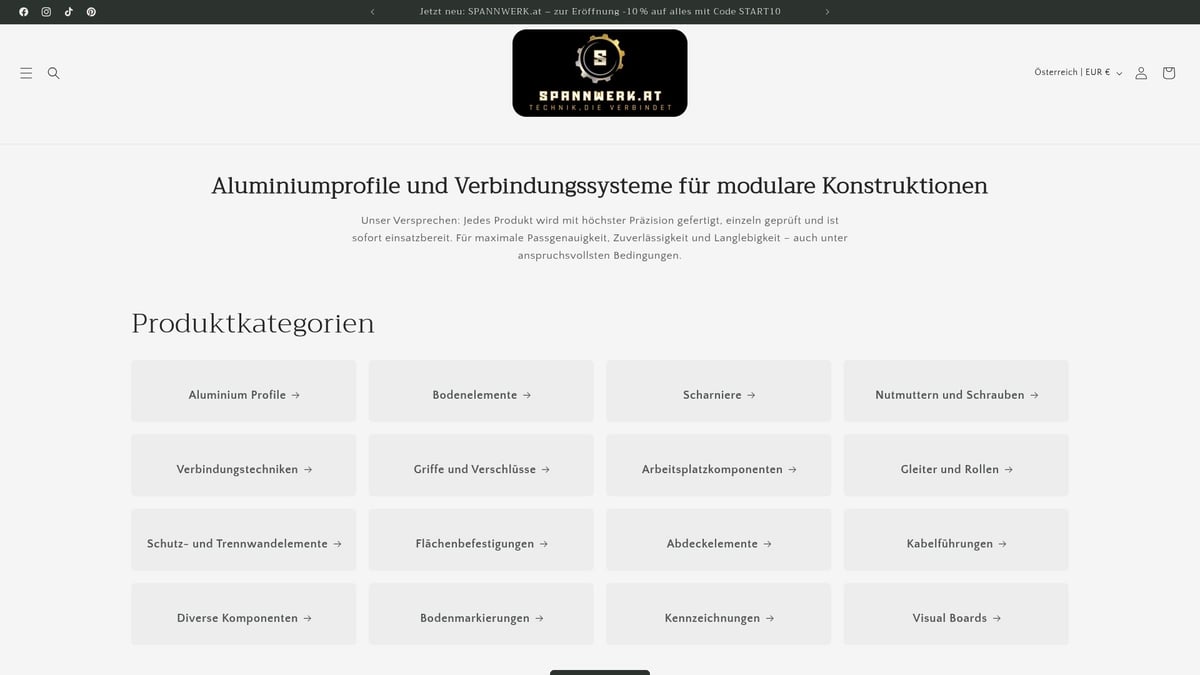
Customers benefit from individual consultation, fast delivery times, and attractive terms. The combination of first-class product quality and personal service makes SPANNWERK.at a preferred partner for projects of any size.
Online shops vs. direct sales
Aluminum profiles are increasingly purchased through online shops. These offer transparent price overviews, fast availability, and a straightforward ordering process. The price per kilogram of aluminum profiles is usually immediately visible online, making price comparisons easier.
Direct sales through manufacturers or specialist retailers, on the other hand, offer personalized advice, greater flexibility for custom orders, and often better terms for larger order quantities. Price comparison portals help identify the most affordable source and take advantage of special offers.
Tips for choosing a provider
When comparing suppliers, buyers should consider various criteria. Besides the price per kg of aluminum profiles, delivery times, service quality, and available advice are crucial. Customer reviews offer valuable insights into reliability and order processing.
A structured comparison of offers, along with a review of certifications and references, helps in making the best decision. This not only saves costs but also ensures quality and adherence to deadlines in the project.
Price optimization: How to buy aluminum profiles cost-effectively
Targeted optimization in the procurement of aluminum profiles is crucial for the competitiveness of many projects. Those who understand the key levers can sustainably reduce the price per kilogram of aluminum profiles and implement projects more efficiently. Below, you will learn how to save costs through planning, analysis, and targeted measures.
Needs assessment and planning
Precise needs assessment is the foundation for effective cost control. Accurately calculating actual material requirements not only reduces the risk of over-ordering but also optimizes the price per kg of aluminum profiles through targeted quantity planning.
Typical sources of error include inaccurate bills of materials or failure to account for waste. Structured planning that also incorporates project changes and safety margins helps to avoid unnecessary expenses. Use checklists and software solutions to bring transparency to the requirements assessment.
Price comparison and quote request
A thorough price comparison is essential to get the best price per kg for aluminum profiles. Obtain quotes from several suppliers and look out for tiered pricing and discounts for larger quantities.
Don't just compare the base price, but also delivery costs and payment terms. Online tools and platforms like "Aluminium Price Today per Kilogram" offer current market prices and allow for a quick overview of the daily rate. Also check whether services like cutting are included in the price.
Negotiation strategies with suppliers
Effective negotiations with suppliers offer great potential to optimize the price per kg of aluminum profiles. Argue your case with realistic quantities, long-term partnerships, and market knowledge.
Prepare yourself with up-to-date pricing information and prioritize transparent communication. Specifically request discounts for large orders or recurring business. Real-world examples show that customized terms are often possible if you strengthen your negotiating position.
Purchasing groups and framework agreements
By joining forces with other companies in purchasing groups, you can often achieve better conditions on the price per kg of aluminium profiles. Group orders increase the order volume and lead to attractive quantity discounts.
Framework agreements offer additional planning security and protect against sudden price fluctuations. Such models are particularly effective in industrial settings for keeping costs predictable and stable. Inquire about existing collaborations in your industry.
Timing and market observation
The right time to buy significantly influences the price per kg of aluminium profiles. Observe seasonal fluctuations and use market analyses to identify trends early.
Industry reports such as the IKB Raw Materials Price Information September 2025 offer valuable insights into expected price developments. Market monitoring tools help to optimally utilize price windows and thus reduce costs in the long term.
Avoid mistakes: What drives up costs unnecessarily?
Typical mistakes that unnecessarily increase the price per kg of aluminum profiles include inaccurate specifications, short-notice orders, or a lack of price comparisons. Hidden costs such as expensive packaging, rush surcharges, or unaccounted-for storage costs also contribute to the overall increase.
Make sure to thoroughly review offers and include all additional costs. Experience shows that a structured purchasing strategy and regular review of processes help to avoid these cost drivers.
Technical aspects and application areas of aluminium profiles
Aluminum profiles are indispensable in modern building and construction projects. They offer versatile technical solutions and significantly influence the price per kilogram of aluminum profiles. Their properties and applications determine how efficiently projects can be planned and implemented.
Different profile types and their areas of application
Aluminum profiles are available in numerous variations, which directly affect the price per kg. The most important types include:
- Standard profiles: Universally applicable, for example in furniture making or frame constructions.
- Construction profiles: Specifically developed for mechanical engineering, plant engineering and automation.
- Special profiles: Tailor-made for individual requirements, for example in vehicle construction.
Innovative applications can be found in trade fair construction, photovoltaic systems, and conveyor technology. The wide variety of profile types ensures that virtually every technical requirement can be efficiently met.
Technical features and benefits
The technical properties of aluminum profiles are a crucial factor in determining the price per kg. They are compelling due to:
- Lightweight construction: Low weight with high stability.
- Corrosion resistance: Durability even under adverse conditions.
- Flexible processing: Easy cutting, drilling and joining.
Compared to steel or plastic profiles, aluminum profiles offer an optimal weight-to-load-bearing ratio. Statistics show that they are up to 50% lighter than steel profiles and yet can withstand comparable loads.
Processing options and accessories
The diverse processing options increase the attractiveness and influence the price per kg of aluminium profiles. Common processes include:
- Cutting: Individual length adjustments for every project.
- Drilling and milling: Assembly of fasteners and accessories.
- Surface treatments: Anodizing or powder coating for added protection.
Essential accessories include connectors, hinges, and casters. In practice, these components facilitate the rapid assembly of modular systems and offer flexible expansion options.
Sustainability and environmental aspects
Sustainability is playing an increasingly important role in the price per kg of aluminum profiles. Using recycled aluminum not only reduces costs but also improves the CO2 balance. The recycling rate for aluminum in Europe is over 90%, which significantly reduces environmental impact.
Learn more about the advantages of recycled aluminum and its impact on price and sustainability in our article. Companies are increasingly relying on a circular economy to achieve environmental goals and save costs in the long term.
Future trends and innovations
The development of new technologies has a lasting impact on the price of aluminum profiles per kilogram. Trends such as smart profiles with integrated sensors or the use of new alloys are opening up additional application possibilities. Modern manufacturing processes enable more precise and efficient production.
Forecasts indicate that by 2030, the integration of electronics and the digitalization of manufacturing will continue to increase significantly. This will give innovative companies a decisive competitive advantage.
Now that you have a comprehensive overview of the pricing factors, market trends, and optimization opportunities for aluminum profiles, you know what really matters when selecting and procuring them. If you value the highest precision, reliability, and customized solutions, you can efficiently advance your project with the right aluminum profile. Take advantage of the opportunity to discover quality and variety directly online – from standard profiles to custom cuts, all from a single source. Visit us now: Order precision aluminum profiles directly online.